How We Evaluated These Smart Rings
Recommendations here are based on aggregated independent reviews, peer-reviewed studies comparing smart rings to clinical polysomnography, and manufacturer specification data. No hands-on testing was conducted. Where independent accuracy data is available, it takes precedence over manufacturer claims.
The smart ring market is small — three manufacturers dominate the credible end of it — which makes direct comparison straightforward. Accuracy assessments reference published wearable validation literature, including studies from institutions comparing PPG-based devices to gold-standard polysomnography. Battery figures reflect real-world reports from extended user data, not manufacturer maximums.
What to Look For in a Sleep Tracker Ring
Subscription Cost Is Part of the Price
A smart ring purchase is not just a hardware decision. The Oura Ring (both generations) requires $5.99/month for meaningful sleep insights — without it, you lose sleep stages, HRV trends, readiness scores, and temperature tracking. Over 3 years, that adds $215 to the total cost. The Samsung Galaxy Ring has no subscription; every feature it offers is included on day one.
If you are comparing prices, always calculate the 2- or 3-year total, not the sticker price.
Accuracy Matters — and the Finger Has an Advantage
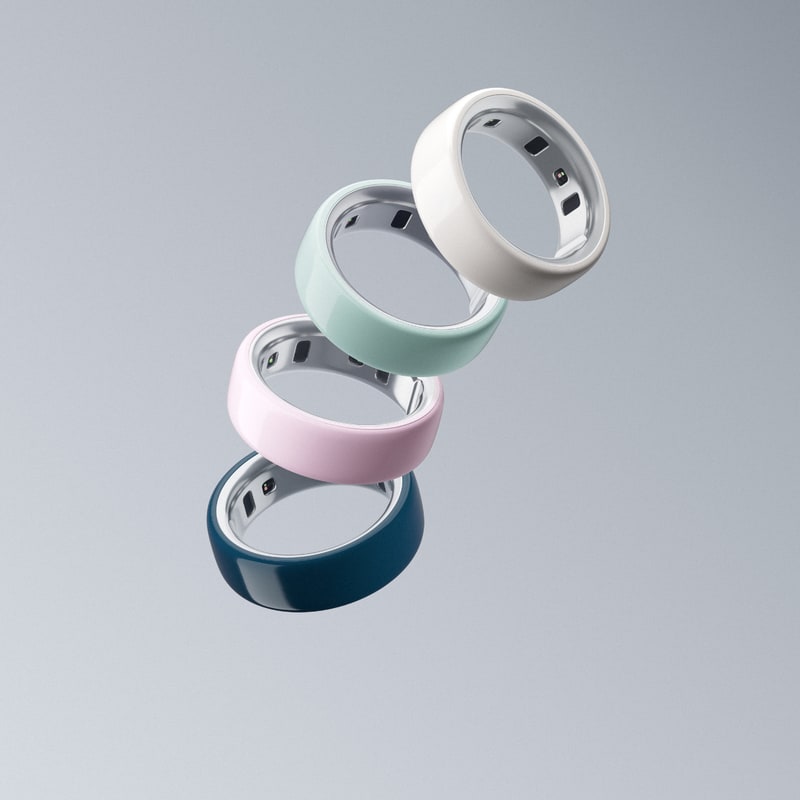
All smart rings use photoplethysmography (PPG) sensors on the inner surface of the band. Because the finger’s digital arteries provide consistent blood flow, ring-based PPG is more reliable than wrist-based PPG for heart rate variability and sleep stage detection. This is not a manufacturer claim — it is well-documented in published wearable validation research.
Between rings, sensor count and algorithm quality determine the accuracy gap. The Oura Ring 4’s 18-channel system represents a meaningful step forward from the Gen 3’s design and from Samsung’s current hardware. If accuracy is the deciding factor, the Ring 4 wins.
Battery Life Determines Charging Behaviour
Eight days (Oura Ring 4) means charging twice a week. Seven days (Samsung Galaxy Ring, Oura Gen 3) means the same. This is a meaningful advantage over any smartwatch, and it effectively eliminates the “should I charge it tonight?” problem. None of the three rings reviewed here require daily charging; all are suitable for consistent overnight tracking.
Ecosystem and Privacy
The Samsung Galaxy Ring works best within the Samsung Health ecosystem. While it supports Google Health Connect, full feature access is optimised for Samsung and Android users. iOS compatibility exists but is more limited. If you are an iPhone user, the Oura Ring integrates far more deeply with Apple Health.
Data privacy matters for a device that records biometric data every night. Both Oura and Samsung are GDPR-compliant and publish data deletion policies. For a deeper look at how each ring handles your data, see the Data Privacy sections in the individual review pages: Oura Ring 4 review and Samsung Galaxy Ring review. For comparison with smartwatch alternatives, see the Best Smartwatches for Sleep Tracking guide.