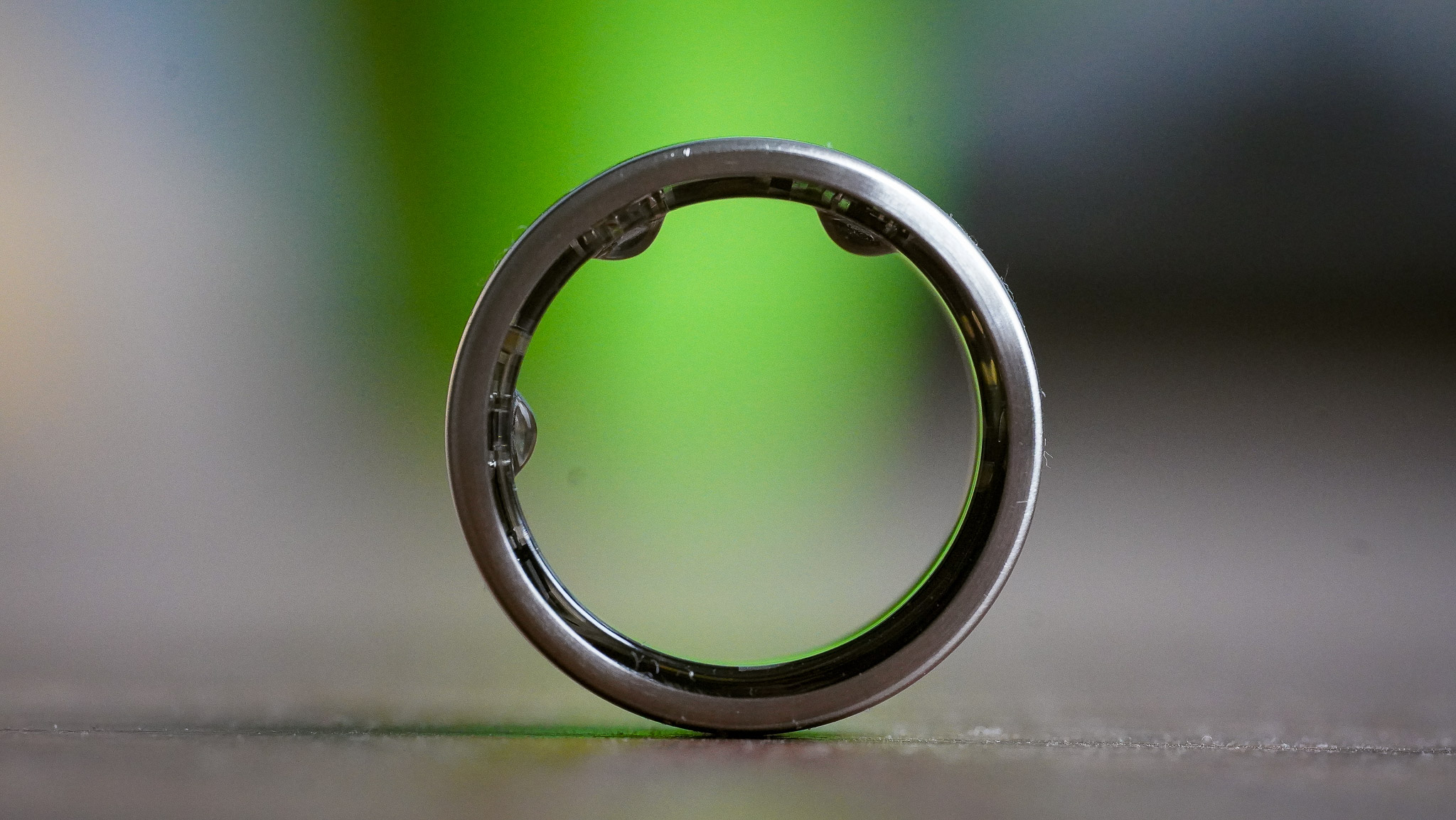
Oura Ring 4 Review
The Oura Ring 4 is the most accurate consumer sleep tracker available in 2025. If sleep and recovery data are your priority and you can accept the ongoing subscription cost, nothing else comes close.
Check priceYour research-based guide to sleep tracking devices. Every verdict here is built from peer-reviewed accuracy studies, independent benchmarks, and aggregated long-term user data β not a single reviewer's short-term impression.
The Oura Ring 4 is the most accurate consumer sleep tracker available in 2025. If sleep and recovery data are your priority and you can accept the ongoing subscription cost, nothing else comes close.
Check price
The Oura Ring Gen 3 is the most accurate consumer sleep tracker available. If sleep quality and recovery data are your priority and the subscription model works for you, nothing currently does it better.
Check price
The Withings Sleep Analyzer is the best choice for anyone who cannot or will not wear a sleep tracker, and it is the only consumer device that provides clinically meaningful sleep apnea screening. Sleep stage accuracy is good for a contactless device; apnea detection is the standout feature no competitor offers.
Check priceTop picks: Withings Sleep Analyzer, Fitbit Sense 2, Xiaomi Mi Band 8
Read guideTop picks: Withings Sleep Analyzer, Sleepme ChiliSleep
Read guideTop picks: Oura Ring 4, Samsung Galaxy Ring, Oura Ring Gen 3
Read guideTop picks: Oura Ring 4, WHOOP 5.0, Garmin Index Sleep Monitor
Read guideTop picks: Garmin Venu 3, Fitbit Sense 2, Apple Watch (Sleep Tracking)
Read guideTop picks: Oura Ring 4, Samsung Galaxy Ring, Withings Sleep Analyzer
Read guideTop picks: Oura Ring 4, Samsung Galaxy Ring, Fitbit Sense 2
Read guideTop picks: Withings Sleep Analyzer, Samsung Galaxy Ring, Garmin Venu 3
Read guideTop picks: Garmin Venu 3, Fitbit Sense 2, Samsung Galaxy Watch 6
Read guideTop picks: Oura Ring Gen 3, Garmin VΓvosmart 5, Whoop 4.0
Read guide
Apple Watch and the Samsung Galaxy Watch 6 are the two leading smartwatches for users who want sleep tracking alongside full smartwatch functionality. They are locked to opposite ecosystems β iOS for Apple, Android for Samsung β but for anyone who can choose either platform, the question is which one actually does a better job of tracking your sleep.
Read comparisonThe Oura Ring 4 is the established leader in smart ring sleep tracking, while the Samsung Galaxy Ring is a strong first-generation challenger built around a single decisive pitch: no subscription, ever. Both are titanium rings with comprehensive sleep and recovery tracking β the question is whether Oura's accuracy lead justifies its ongoing cost.
Read comparisonOura Ring 4 and WHOOP 5.0 are the two most prominent subscription-based recovery trackers on the market β one a screenless ring, the other a screenless band. Both demand an ongoing fee, but they are built around different philosophies: Oura prioritises sleep accuracy, WHOOP prioritises training load. The right winner depends on which of those two priorities matters more to you.
Read comparisonThese three devices represent the three dominant approaches to premium recovery and sleep tracking in 2026: Oura's accuracy-first ring, WHOOP's training-load-first band, and Samsung's no-subscription ring. All three are screenless, all three are built for 24/7 wear, and each makes a different bet about what matters most to you.
Read comparisonSleep scores from Oura, WHOOP, Garmin, and Fitbit all measure overlapping things β sleep duration, sleep stage quality, and overnight recovery β but they weight and label them differently. This guide explains what each score actually measures, then covers the interventions with the strongest published evidence for improving the underlying physiology. The goal is a better night, not a better number.
11 min readEvery consumer sleep tracker shows you a breakdown of deep sleep, REM, light sleep, and awake time. Most users look at these numbers without a clear framework for interpreting them. This guide explains what each stage actually is, what a healthy distribution looks like, what trackers can and cannot measure accurately, and which numbers are worth acting on.
10 min readYour sleep tracker shows four stages β deep, REM, light, and awake. But what do they actually represent physiologically, and why does each matter? This article explains the science behind sleep architecture: what happens in each stage, what a healthy distribution looks like, how age changes the picture, and what consumer trackers can and cannot measure about these stages.
13 min readClaims about sleep tracker accuracy range from 'clinical-grade' to 'essentially useless.' The truth, as documented in published independent research, sits in between. This article examines what the peer-reviewed literature actually says about consumer sleep tracker accuracy β what devices measure reliably, what they measure poorly, and what this means for how you should use your data.
13 min readThis guide gives you a clear decision framework for choosing a sleep tracker β covering form factor, budget, subscription model, and platform fit. By the end, you will know exactly which category of device suits your situation, what to prioritise, and what to ignore.
12 min readConsumer sleep trackers and clinical sleep studies are both called 'sleep tracking,' but they measure entirely different things using entirely different methods. A smart ring and a clinical polysomnography lab have almost nothing in common except the word 'sleep.' This article explains what each does, where each is appropriate, and β most importantly β when symptoms require clinical evaluation rather than consumer device monitoring.
12 min readSmart rings and smartwatches both track sleep, but they do it differently and suit different users. This guide compares them directly on every criterion that matters β accuracy, overnight comfort, battery life, daily functionality, and total cost β and gives you a clear rule for choosing between them.
10 min readHeart rate variability (HRV) appears in nearly every premium sleep and fitness tracker, but most users do not have a clear model for what it measures or how to use it. This article explains the physiology of HRV, why it serves as a recovery and readiness indicator, how consumer trackers measure it, and β critically β how to interpret your own data without falling into the trap of comparing yourself to others.
12 min readSleep trackers are wearable and non-wearable devices that use sensors β accelerometers, optical heart-rate monitors, skin temperature sensors, and microphones β to infer sleep duration, sleep stages, and physiological markers like heart rate variability (HRV) and blood oxygen saturation. Most consumer devices fall into four form factors: smart rings, smartwatches, armbands, and under-mattress monitors.
They are not for everyone. If you sleep well and feel rested, adding a tracker rarely improves that. Where they add real value is for people managing chronic fatigue, recovering from illness, training seriously, or trying to identify patterns behind poor sleep. The data they surface β particularly HRV trends and sleep stage consistency over weeks β can point to meaningful behavioural changes worth making.
GreatHealthGear evaluates sleep trackers by aggregating peer-reviewed accuracy studies, independent validation research, manufacturer specifications, and long-term user data from verified purchasers. No device is tested in-house. Every score reflects the weight of external evidence, not a single reviewer's short-term impression. That makes our conclusions slower to form and harder to distort β which is exactly the point.
Every sleep tracker review on this site is built from seven scored categories. Design & Build Quality covers materials, comfort, and durability for something worn every night. Setup & Ease of Use looks at onboarding and daily friction. Tracking Accuracy compares the device's sleep stage and HRV data against clinical benchmarks and peer-reviewed validation studies β the single most important factor for a sleep tracker. Features & Insights weighs the depth and usefulness of the data provided. Battery Life reflects real-world charge duration. App & Software covers the companion app's design and data privacy practices. Subscription & Pricing weighs the total cost β hardware plus any required subscription β against what you actually get.