Quick Summary
GreatHealthGear RatingThe Oura Ring Gen 3 is the most accurate consumer sleep tracker available. If sleep quality and recovery data are your priority and the subscription model works for you, nothing currently does it better.
Ideal for
- Sleep-focused users who want deep, accurate data
- Biohackers and recovery-focused athletes
- Anyone who dislikes wearing a watch to bed
- People who want HRV and daily readiness scores
Not ideal for
- Budget-conscious buyers — device plus subscription adds up fast
- People who need a screen, GPS, or smartwatch notifications
- Those who primarily care about workout and sports tracking
Available at
Oura Ring Official
From $299
Pros & Cons
- + Best-in-class sleep stage and HRV accuracy
- + Comfortable enough to forget you are wearing it
- + 7-day battery life with minimal charging effort
- + Rich recovery, readiness, and cycle tracking data
- + Elegant, discreet design that looks like jewellery
- + 100m water resistance — wear it everywhere
- - Monthly subscription required ($5.99/month) for full insights
- - No on-device display or real-time stats
- - Expensive upfront ($299 to $549 depending on finish)
- - Ring sizing requires ordering a free kit before purchasing
Design & Build Quality
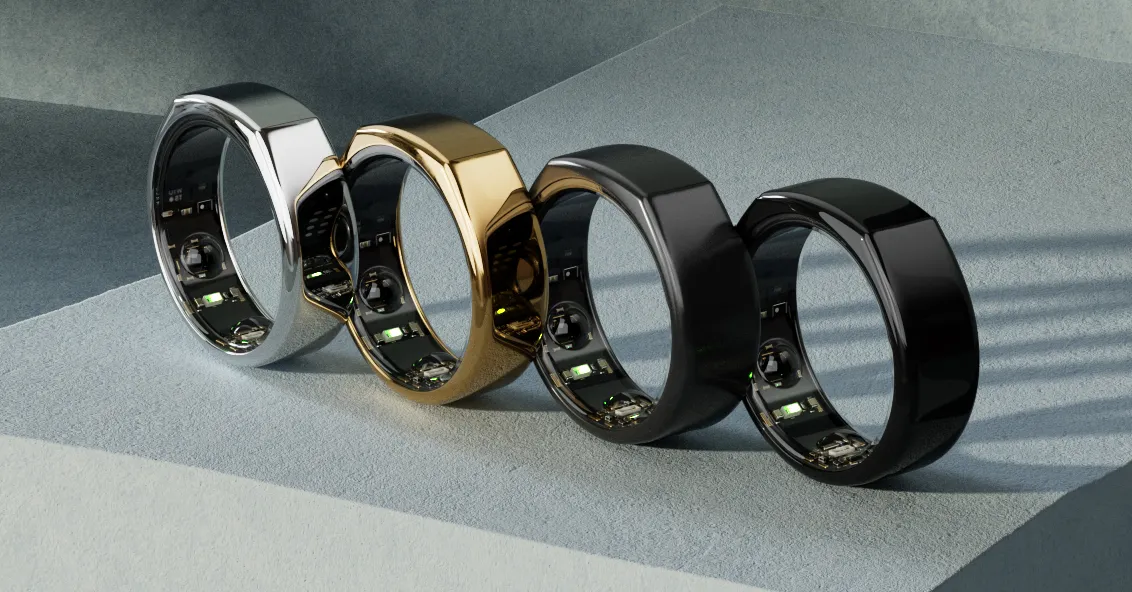
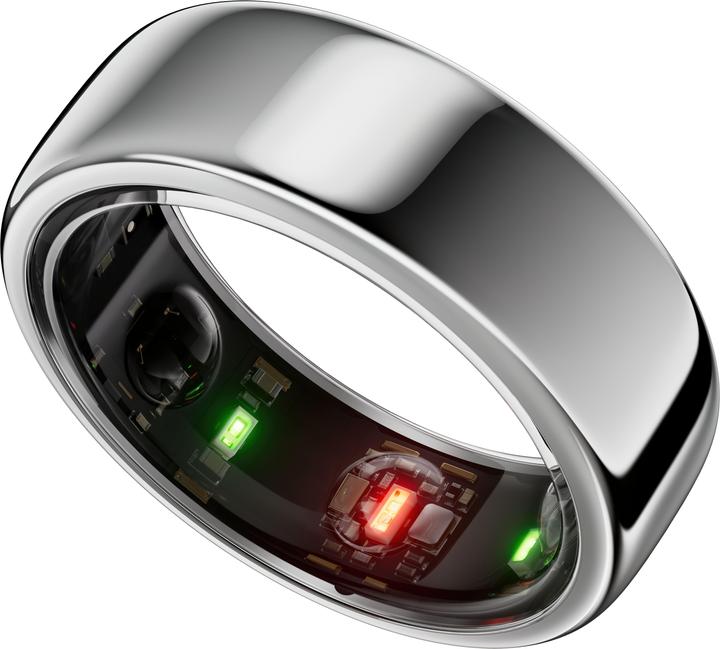
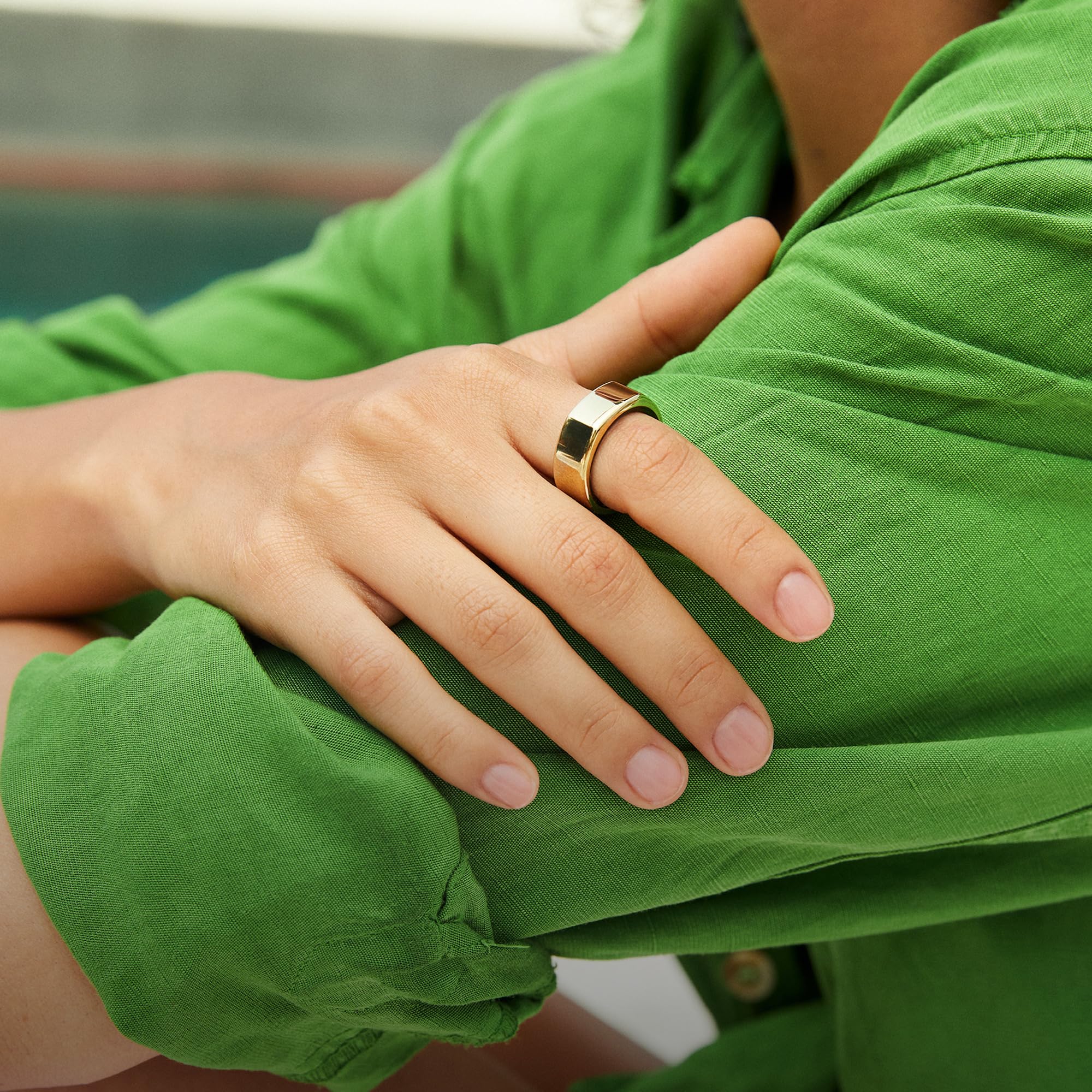
The Oura Ring Gen 3 is genuinely beautiful. Available in Silver, Black, Gold, Rose Gold, and Stealth finishes — across two form factors (the Heritage plateau and the Horizon circle) — it looks like jewellery rather than a fitness tracker, which is entirely the point.
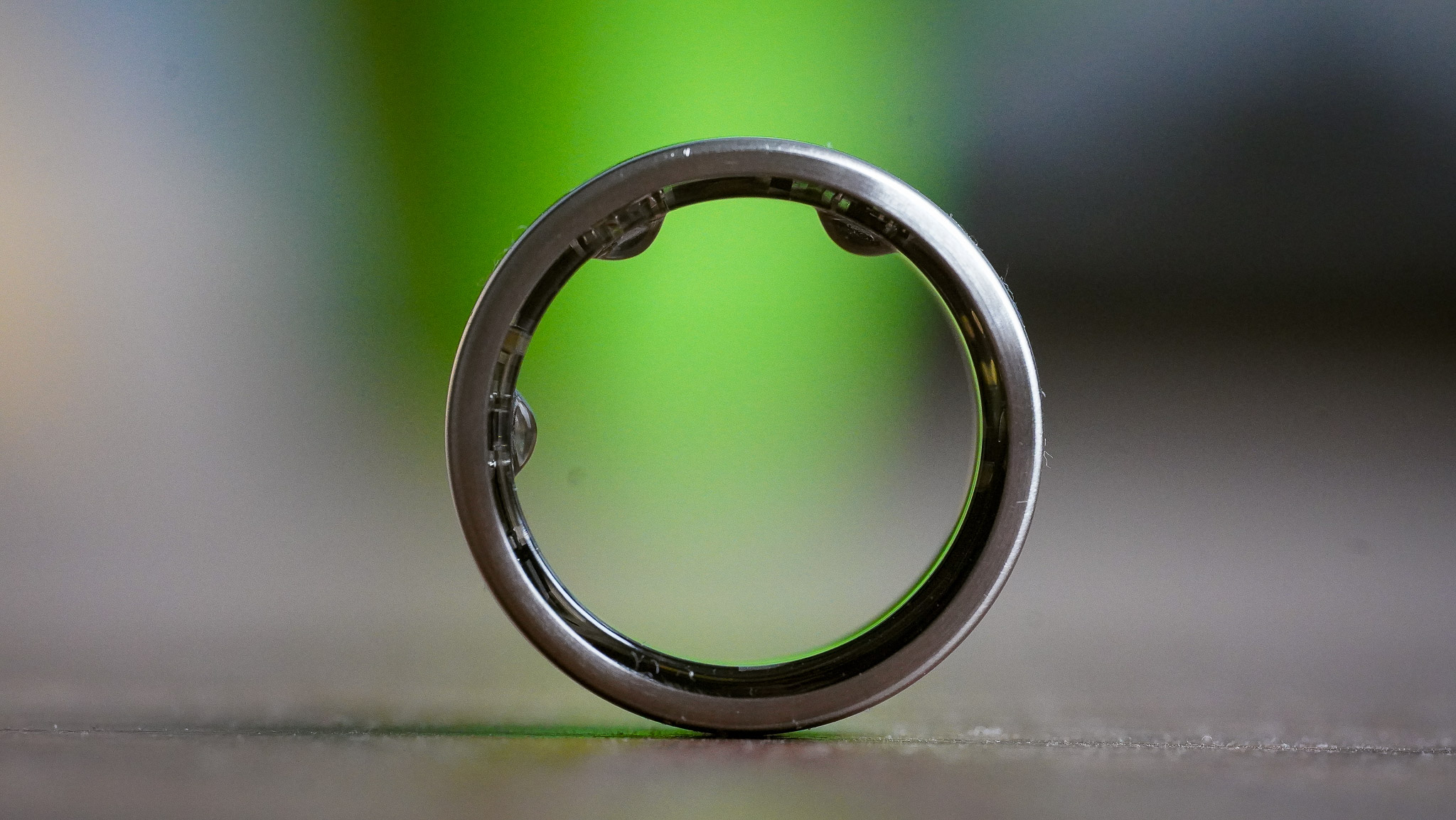
The ring is made from aerospace-grade titanium with a smooth inner surface housing the optical sensors. At 4 to 6 grams depending on size, it is light enough to forget on your finger. The Horizon style is a perfectly round, uninterrupted circle with a subtle sensor dimple on the underside; the Heritage has a slight raised plateau. Both sit low enough on the finger to avoid catching on clothing or bedding during sleep.
All finishes hold up well to daily wear. The matte Stealth and Black resist visible scratching better than the polished Silver and Gold. Rated to 100m water resistance, the ring handles showers, swimming, saunas, and ice baths without any concern.
Comfort & Wearability
Sizing matters — do not skip this step. Oura ships a free sizing kit before you order. Wear the plastic sizers for at least 24 hours across different times of day, as finger size shifts with temperature, hydration, and activity level. Getting this right affects both comfort and sensor accuracy. Order one size up if you are between sizes.
Once properly fitted, the ring disappears. At 4 to 6 grams it is lighter than most rings people already wear. The smooth titanium interior and low-profile body mean there are no edges to catch on bedding during sleep — a common problem with chunky wrist trackers.
Day-to-day the ring imposes almost nothing. No screen to check, no notifications, no buttons. You wear it, sleep in it, shower in it, and forget about it until you open the app in the morning. This passivity is a genuine design achievement and a significant reason why Oura users tend to maintain consistent wear rates compared to smartwatch users.
The ring needs 5 to 7 nights of baseline data before it can personalise your HRV and readiness scores. The first few nights are calibration — not a verdict on your health.
Setup & Ease of Use
Setup takes around 10 minutes. Download the Oura app, create an account, pair via Bluetooth, and follow the guided onboarding. The app explains each metric clearly as you go, making it accessible even for first-time sleep tracker users.
Day-to-day use is genuinely frictionless. All tracking is automatic. Syncing happens when you open the app. Firmware updates install overnight. There is nothing to press, tap, or configure on a daily basis — a meaningful advantage over any smartwatch, where habituation to charging and interaction is a real friction point.
Tracking Accuracy & Performance
This is where the Oura Ring earns its reputation. Multiple independent peer-reviewed studies comparing consumer sleep trackers to clinical polysomnography (PSG) have consistently placed the Gen 3 at or near the top for sleep duration accuracy and HRV measurement.
| Metric | Accuracy |
|---|---|
| Sleep duration | Excellent — within 15–20 min of clinical PSG in most studies |
| Sleep stages | Very good — best among consumer wearables, not clinical grade |
| HRV | Excellent — finger PPG yields more reliable readings than wrist |
| Skin temperature | Excellent — consistent nightly deviation tracking |
| SpO2 | Good — suitable for trend monitoring, not medical diagnosis |
| Respiratory rate | Good — consistent across nights |
Why the finger matters for HRV: Photoplethysmography (PPG) works by detecting blood volume changes in tissue. The finger has stronger, more consistent arterial blood flow than the wrist, which is why ring-based trackers generally outperform wrist trackers on HRV accuracy — a finding that is well-documented in wearable validation literature.
One known limitation: motion during sleep can occasionally cause the ring to misclassify fragmented light sleep as REM. This affects all consumer sleep trackers and is not unique to Oura.
Features & Insights
- Sleep score — composite score based on duration, efficiency, timing, restfulness, and HRV
- Readiness score — daily recovery indicator combining sleep quality, HRV trend, resting heart rate, and activity balance
- Sleep stages — light, deep, and REM breakdown with time in each stage
- HRV — nightly average and 7, 30, and 90-day trend graphs
- Skin temperature — nightly deviation from your personal baseline, sensitive enough to flag illness early in many users
- Blood oxygen (SpO2) — passive overnight monitoring
- Respiratory rate — breaths per minute during sleep
- Daytime activity — steps, active calories, and movement goals
- Cycle tracking — temperature-based menstrual cycle and fertile window prediction
- Cardiovascular age — estimated from HRV trends
The Readiness Score is what most users find most actionable. It distils a complex recovery picture into a single morning number, with plain-English explanations of which factors drove it up or down. Over time this reveals meaningful patterns: how alcohol affects your HRV, how late meals impact sleep efficiency, how different training loads influence next-day recovery.
Compatibility & Integrations
The Oura Ring works with both iOS (iPhone) and Android devices. The iOS experience is marginally more polished, with tighter Apple Health integration, but Android support is solid for the vast majority of users.
Platform support:
- iOS 16+ and Android 8+ required
- Apple Health — full two-way sync of sleep, activity, and heart rate data
- Google Fit — basic activity sync
- Strava, Natural Cycles, Lose It, Heads Up Health, and 40+ other third-party apps via the Oura API
What works well:
- Apple Health sync is seamless and immediate
- API access allows power users and developers to pull raw data
- Integrations with Natural Cycles make this a popular choice for cycle tracking
Where it falls short:
- No native Garmin Connect or Fitbit integration
- Google Fit sync is more limited than Apple Health
- Some Android users report intermittent Bluetooth pairing delays after phone restarts
- Web dashboard is read-only and limited compared to the mobile app
Battery Life
| Claimed battery life | 7 days |
| Real-world average | 6–8 days depending on SpO2 settings |
| Charge time | ~60–80 minutes from empty |
| Charging method | Magnetic dock (included) |
| Water resistance | 100 metres |
Seven days is best-in-class for a health tracking ring and significantly better than any comparable smartwatch. Most users charge the ring once or twice per week, fitting it naturally into a morning routine. The compact magnetic dock is easy to pack for travel.
App & Software Experience
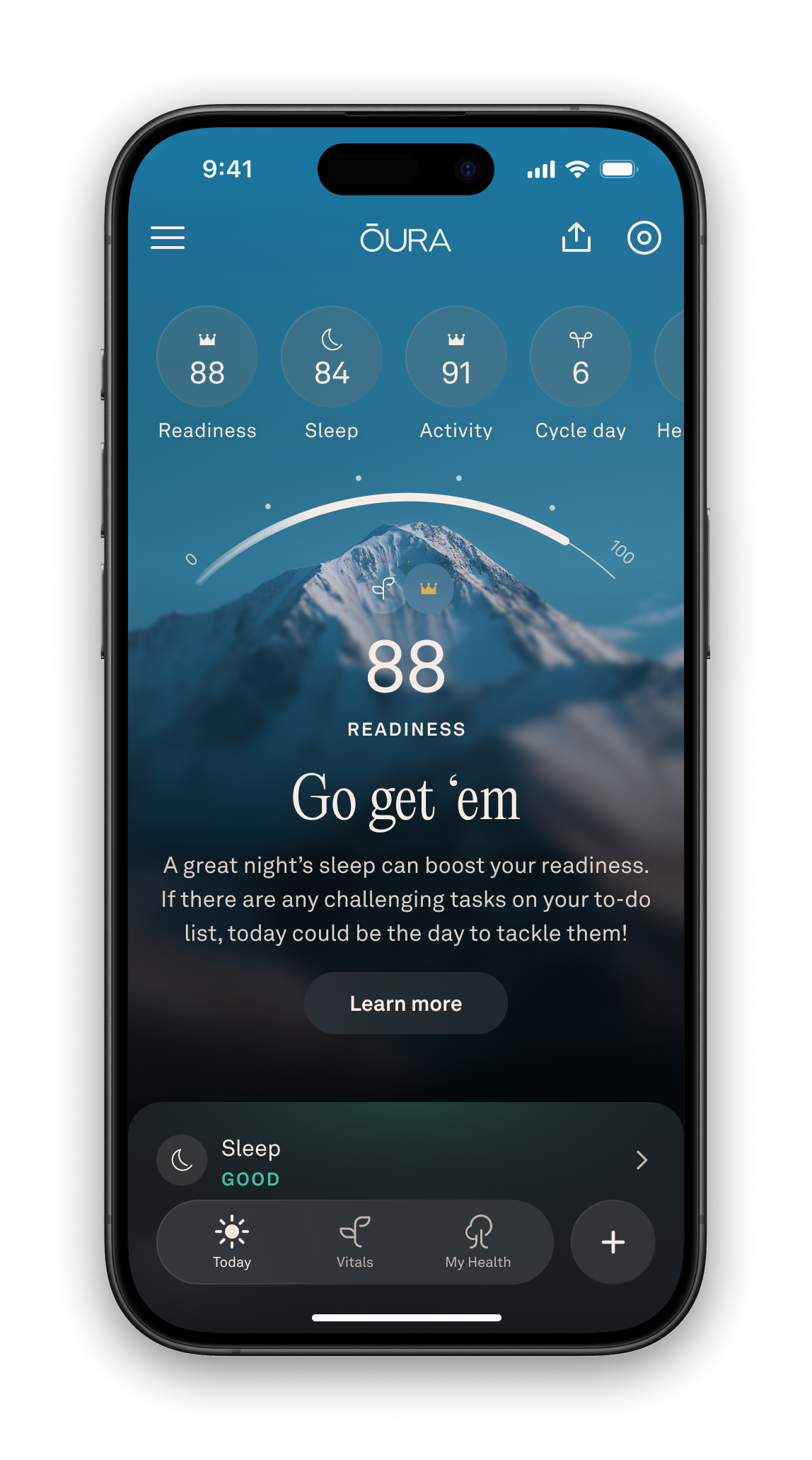
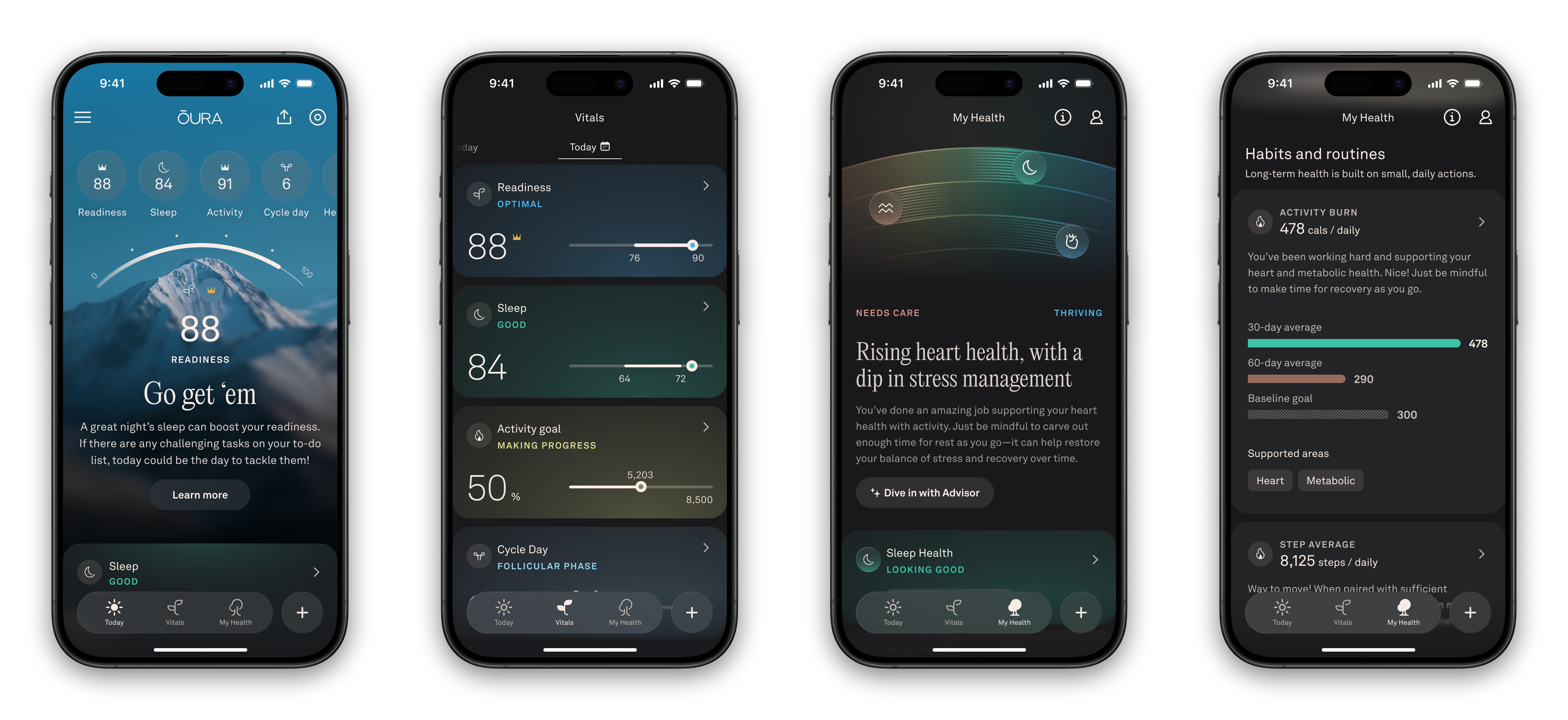
The Oura app is consistently rated as one of the best in the wearables space for design and usability — clean, well-organised, and informative without overwhelming you with raw numbers.
What works well:
- Clear daily dashboard with Sleep, Readiness, and Activity scores at a glance
- Plain-English explanations for every metric — no science degree required
- Trend graphs at 7, 30, 90, and 180-day intervals
- Lifestyle tagging to log alcohol, late meals, illness, or stress
- Guided programmes for sleep improvement, stress reduction, and breathing
- Period and cycle prediction based on temperature trends
Where it falls short:
- Full insights locked behind the Oura Membership paywall
- Occasional Bluetooth sync delays on some Android devices
Data Privacy
Your biometric data is stored on Oura’s servers in the United States. The company is GDPR-compliant, publishes a clear data deletion policy, and does not sell data to third parties. A CSV export option exists via the web dashboard, but it requires navigating to account settings and is not in-app — a friction point for users who want regular data portability. Overall, privacy practices are reasonable for a health wearable, but the export workflow needs improvement.
Value for Money
| Cost | |
|---|---|
| Ring — Silver or Black | $299 |
| Ring — Gold, Rose Gold, or Stealth | $399–$549 |
| Oura Membership (monthly) | $5.99/month |
| Oura Membership (annual) | $69.99/year |
| Free tier (no membership) | Step count and basic sleep duration only |
The subscription model is the most debated aspect of the Oura Ring. Without Membership you lose readiness scores, sleep stage breakdown, HRV trends, skin temperature data, guided programmes, and all coaching content — essentially the entire value proposition disappears.
Paying annually ($69.99/year) saves roughly $2/month versus monthly billing and is the sensible choice for committed users. Over three years the total cost of ownership sits between $500 and $750 depending on finish, placing this firmly in premium territory.
That said, value for money is not the same as price. No other consumer product at any price point reliably matches the Oura Ring’s combination of accuracy, comfort, and insight depth. For users who consistently engage with the data, the cost reflects a product with no real equal.
Final Verdict
The Oura Ring Gen 3 is the most accurate consumer sleep tracker available. If sleep quality and recovery data are your priority and the subscription model works for you, nothing currently does it better.
From $299
at Oura Ring Official
Affiliate link — we may earn a small commission at no extra cost to you
Who Should Buy the Oura Ring Gen 3 Review?
Buy it if you...
- Sleep-focused users who want deep, accurate data
- Biohackers and recovery-focused athletes
- Anyone who dislikes wearing a watch to bed
- People who want HRV and daily readiness scores
Skip it if you...
- Budget-conscious buyers — device plus subscription adds up fast
- People who need a screen, GPS, or smartwatch notifications
- Those who primarily care about workout and sports tracking
Comparison With Alternatives
Oura Ring Gen 3 vs WHOOP 4.0
Both are subscription-based and recovery-focused. The Oura Ring leads on sleep accuracy and daily comfort; WHOOP edges ahead on strain tracking and continuous heart rate during workouts. If sleep data is your priority, go Oura. If training load matters more, go WHOOP.
See full comparison →Oura Ring Gen 3 vs Fitbit Sense 2
The Fitbit Sense 2 offers smartwatch features at a lower price with no required subscription. Oura beats it significantly on sleep tracking depth and HRV accuracy. Choose Fitbit for a smartwatch experience; choose Oura if sleep tracking is the priority.
See full comparison →Oura Ring Gen 3 vs Garmin Venu 3
The Garmin Venu 3 is a full GPS smartwatch with excellent sports tracking. Oura is a dedicated sleep and recovery tool. Garmin for active multi-sport users; Oura for recovery-first biohackers.
See full comparison →Oura Ring Gen 3 vs Oura Ring 4
The Gen 4's 18-channel sensor array improves sleep stage accuracy and adds a day of battery life over the Gen 3. If you already own a Gen 3 in good condition, upgrading is only worth it if accuracy gains matter to you specifically — new buyers should choose the Ring 4.
See full comparison →